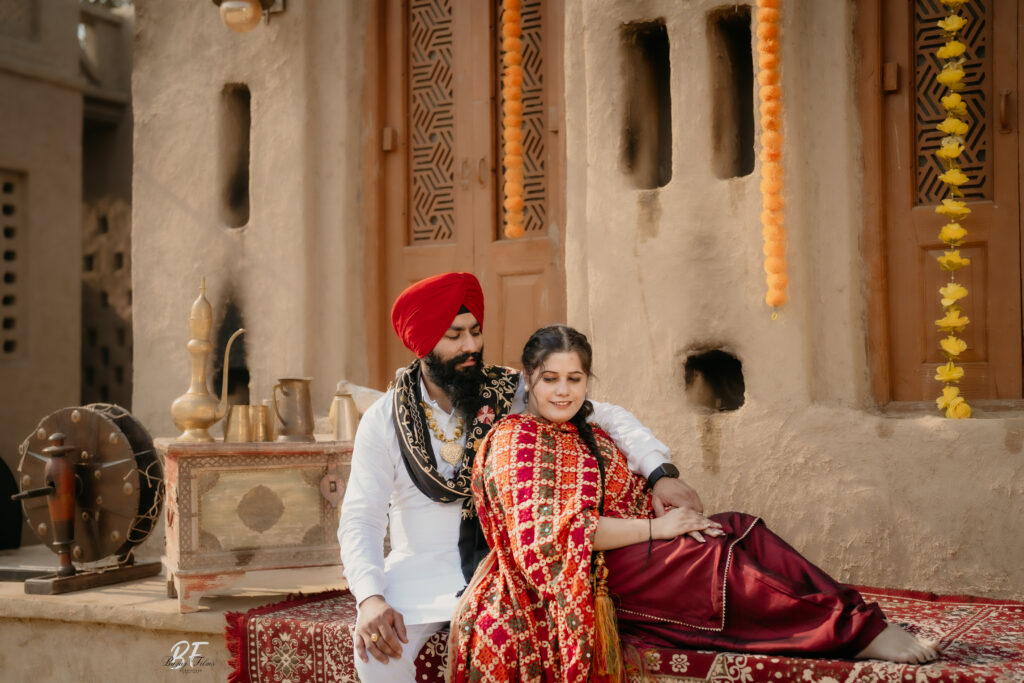
An Anand Karaj is one of the most beautiful and meaningful ceremonies in the world — and photographing it well takes more than a good camera. It takes an understanding of the ritual, a respect for its sanctity, and the sensitivity to capture emotion without ever intruding on a sacred moment. This is a guide to how a Sikh wedding unfolds, and how we photograph it.
Understanding the ceremony
“Anand Karaj” means “blissful union.” Held in the presence of the Guru Granth Sahib, the ceremony centres on the laavan — four hymns during which the couple walks around the Guru Granth Sahib, each round deepening their spiritual bond. It’s preceded by the ardaas and kirtan, and the atmosphere is one of devotion and quiet joy.
How we photograph an Anand Karaj respectfully
- We dress and behave appropriately — heads covered, shoes removed, moving quietly at the edges of the sangat.
- We use available light and longer lenses where possible, so we never disrupt the ceremony with intrusive movement.
- We anticipate key moments — the palla being placed, each laav, the garlanding — so we’re ready without crowding the couple.
- We follow the gurdwara’s guidelines on where photographers may stand and what is permitted.
The moments that matter most
Beyond the rituals, a Sikh wedding is full of feeling — a father’s eyes during the palla, the warmth of the sangat, the shared smile between the couple after the final laav. Our candid, documentary approach is built to catch exactly these unscripted moments, alongside the traditional frames families treasure.
Before & after the ceremony
A full wedding photography package documents everything around the Anand Karaj too — the chooda and choora, the baraat, the milni, the varmala and the reception — so the complete story is told. Many couples pair it with a pre-wedding shoot and a designed album.